Rail Alignment
发布时间:2025-07-29 18:01:46 浏览量:773
Rail Alignment !
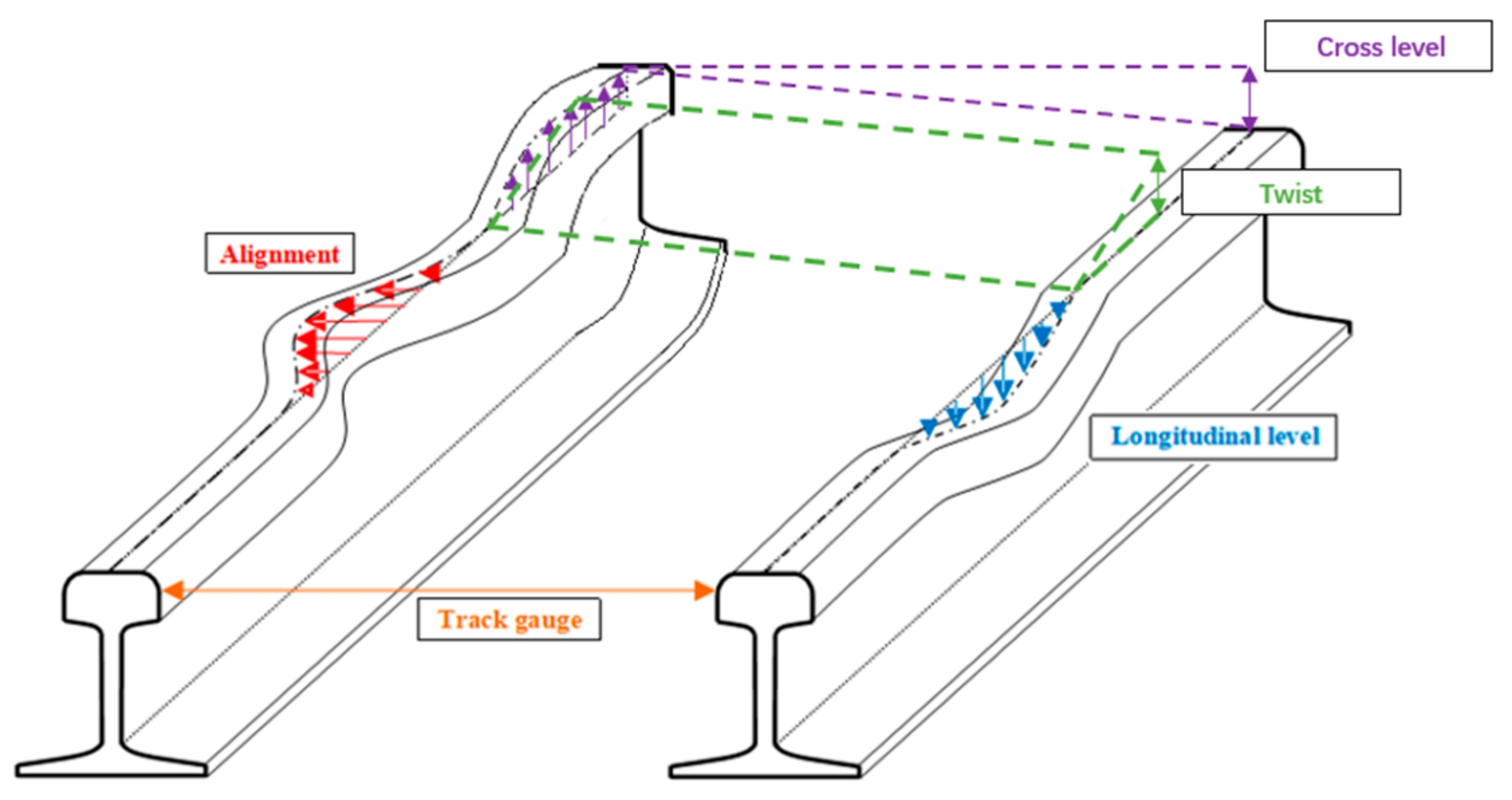
1. Vertical alignment :Refers to the longitudinal profile of the rail in the vertical plane, including gradients and vertical curves. It determines the
elevation profile of the track along its length.
Horizontal alignment: Defines the track's position in the horizontal plane, including straight sections, circular curves, and transition curves. It determines the lateral positioning of the rails.
2. Impact on Track smoothness
Improper vertical alignment causes vertical oscillations in rolling stock, leading to passenger discomfort Creates dynamic wheel-rail impact forces that accelerate rail fatigue and component wear
Deviation exceeding 2mm significantly increases derailment risk during high-speed operations, Causes uneven load distribution on sleepers and ballast, leading to differential settlement
Impact on Track smoothness
Poor horizont alalignment induces lateral forces causing "hunting oscillation" in vehicles
Increases flange contact and gauge-widening forces on curved sections
Deviation beyond ±2mm creates excessive wheel-rail friction and accelerated wear
Leads to rail corrugation and rolling contact fatigue on the rail head
3. Maintenance Operations:
Railway track geometry deteriorates over time due to dynamic loading, thermal expansion, and ground settlement. Two critical maintenance operations restore optimal alignment:
Tamping ( rail lifting)
The process of correcting vertical alignment by raising the track to design elevation. Compacts ballast beneath sleepers to eliminate voids and restore proper track level.
Purpose: Eliminates vertical misalignment, evens load distribution, prevents differential settlement.
Lining (Shifting)
The lateral correction of track position to restore horizontal alignment. Adjusts rails to designed centerline position using specialized track machinery.
Purpose: Corrects horizontal deviations, reduces lateral forces, prevents gauge widening and derailments.